Scrum is in effect a guide. It was first presented in 1995 and has evolved throughout the years. You can find the latest version which at the time of writing is the 2020 version here: Scrum Guide | Scrum Guides
Scrum is a lightweight framework that helps people, teams and organizations generate value through adaptive solutions for complex problems.
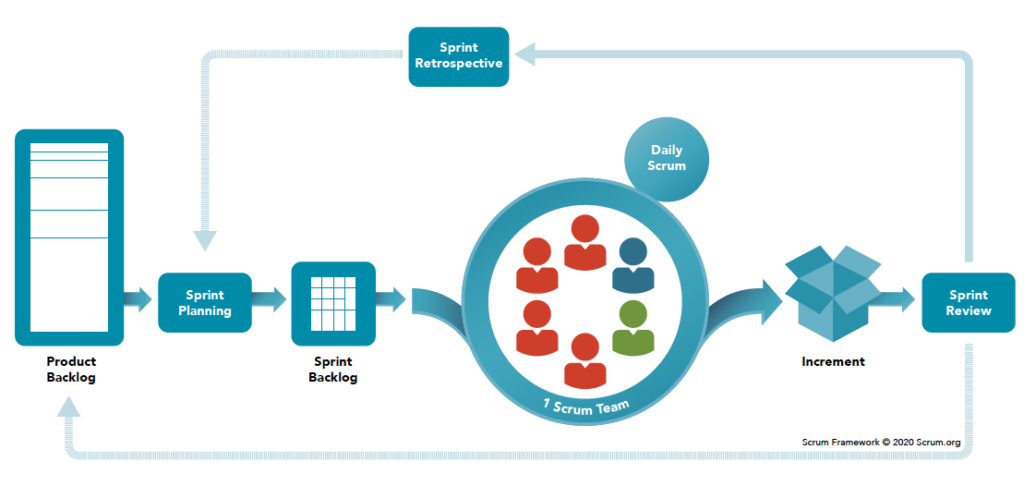
An easy way to think about Scrum is 3-5-3.
The Scrum Team
There are 3 core accountabilities in the Scrum team:
- Developers
- Product Owner
- Scrum Master
Scrum Events
There are 5 events that make up the cadence of Scrum:
- Sprint
- Daily Scrum
- Sprint Planning
- Sprint Review
- Sprint Retrospective
Scrum Artifacts
There are 3 artifacts that represent the work (or value) being delivered by Scrum:
- Product Backlog (and Product Goal)
- Sprint Backlog (and Sprint Goal)
- Increment (and Definition of Done)
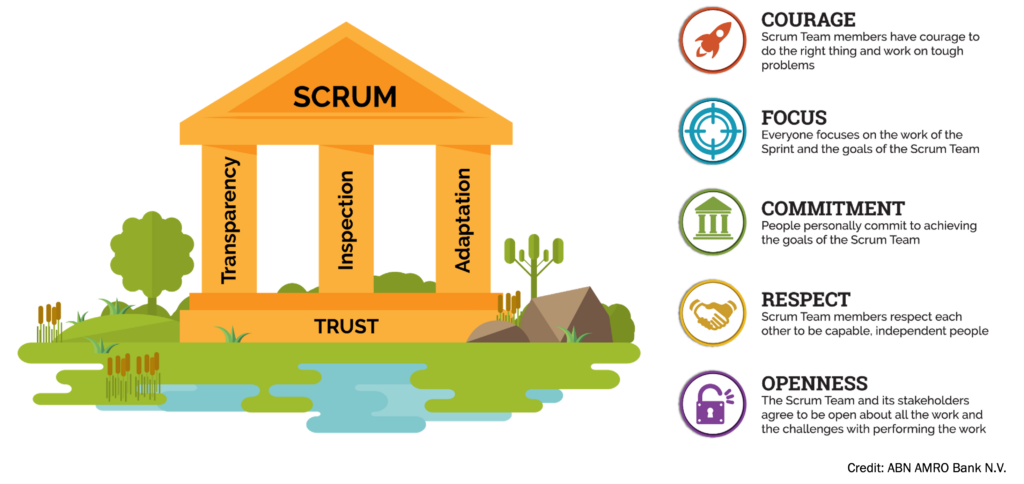
To ensure the success of everything you build, just like constructing a house, it is essential to establish strong foundations and supporting structures.
The Foundations, Trust & the 5 Scrum Values
There are also 5 Scrum Values that underpin everything we do in Scrum. These are:
- Commitment
- Focus
- Openness
- Respect
- Courage
These values foster trust within the scrum team. Trust is the essential foundation that every high-performing team needs to allow it to thrive. Please see this blog for a deeper dive into the values.
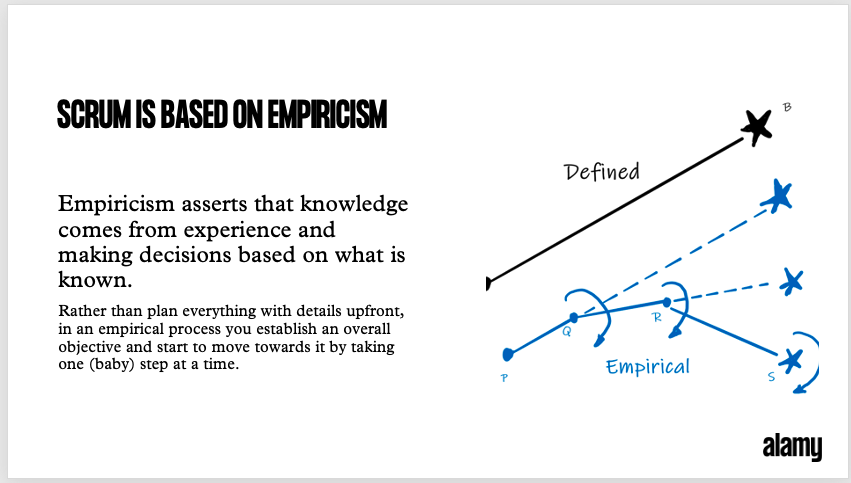
Empiricism, the supporting 3 Pillars
And 3 Scrum Pillars:
- Transparency
- Inspection
- Adaption
A helpful analogy for understanding adaptation might be the experience of taking a flight.
Imagine a plane departing from Heathrow Airport in London, with its destination set for JFK in New York. Similar to Scrum, the flight journey involves reaching a specific goal or destination, but the exact route cannot be predetermined. Along the way, unexpected factors such as weather conditions, a flock of birds or other aircraft may require course corrections and adaptations.
Just as a pilot adjusts the flight path based on new information, Scrum teams embrace a similar approach. They aim to reach their goal safely and efficiently, but they remain open to adapting as they gather, learn, and assimilate new information. This analogy illustrates the iterative nature of Scrum, where feedback and new insights are key to success.
Collaboration and teamwork are vital components of both flying a plane and practicing Scrum. While the analogy focuses on the pilot, it’s important to remember that the entire flight crew and air traffic control play crucial roles in ensuring a safe journey. Similarly, Scrum teams rely on close collaboration, with everyone actively contributing to decision-making and course correction. By working together, they can effectively navigate obstacles and achieve their desired objectives.
Additionally, the analogy highlights the importance of continuous improvement. Just as pilots regularly update their knowledge and skills, Scrum teams dedicate time for reflection and retrospectives. This enables them to identify areas for improvement, refine their approach, and enhance future iterations. Embracing change and responding to feedback become integral parts of the journey towards project success.
Challenges we may face
On the surface, Scrum appears simple to understand, but it poses significant challenges when it comes to mastery. One of the key difficulties lies in fostering effective collaboration within the Scrum team. Scrum emphasizes the importance of cross-functional teamwork, where developers, the Product Owner, and the Scrum Master collaborate closely throughout the sprint. This level of collaboration requires open communication, shared understanding, and a commitment to collective ownership.
Another challenge lies in the need to ship fast and often. Scrum promotes iterative and incremental delivery, encouraging teams to produce potentially shippable increments at the end of every sprint. This frequent delivery requires teams to streamline their processes, embrace continuous integration and delivery practices, and maintain a focus on delivering value to the stakeholders. It can be challenging to strike a balance between speed and quality, ensuring that the delivered increments meet the desired level of excellence while meeting the sprint goals.
To overcome these challenges, Scrum teams need to embrace a culture of trust, transparency, and continuous improvement. They must foster a collaborative environment where individuals feel safe to share ideas, challenge assumptions, and collaborate effectively. Additionally, they should embrace agile engineering practices, such as automated testing, continuous integration, and continuous deployment, to enable fast and reliable delivery.
Becoming proficient in Scrum requires dedication, perseverance, and a commitment to ongoing learning and adaptation. It involves not only understanding the framework’s mechanics but also embracing the values, principles, and mindset that underpin Scrum’s success. With practice, patience, and a supportive environment, teams can navigate the challenges and unlock the full potential of Scrum to deliver high-quality products in a collaborative and iterative manner.