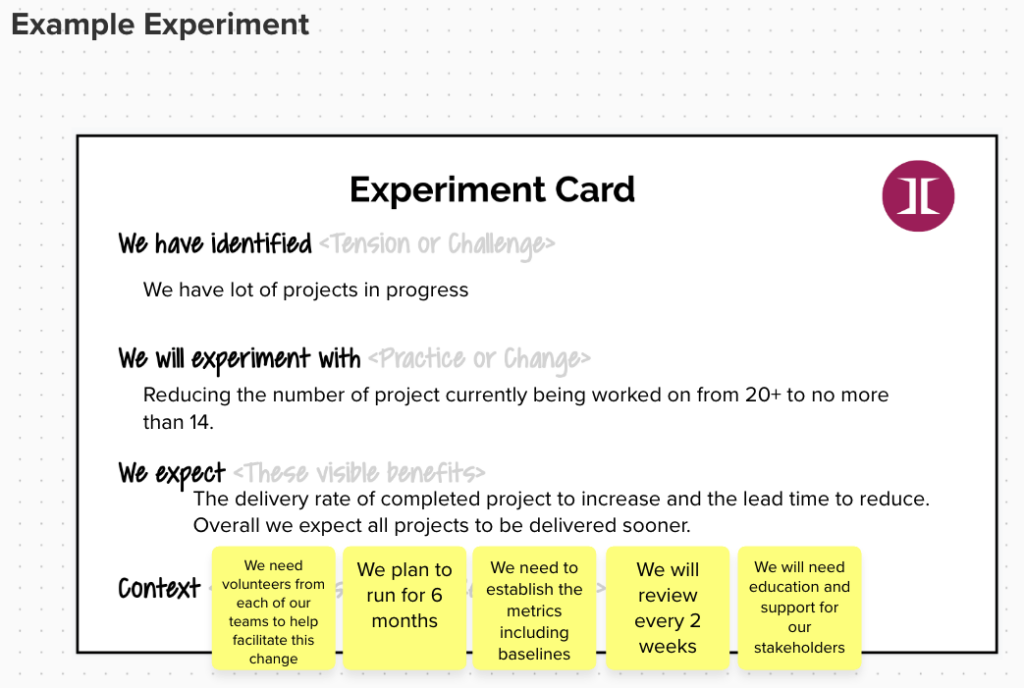
I ran through an exercise today in the Alamy COP I had used in the past and learned from Mark Summers at Beliminal. It was designed to help teach a format around generating change experiments relating to common (processes, relationships, tasks etc.) tensions in organisations.
Introduction
In change management, it is totally normal and even healthy to have tensions. But when the tension becomes too tight, think of this as an elastic band pulled out wide in between your hands, it’s either going to snap or stretch so far it’s damaged beyond repair. We should relieve the tension to a suitable level without it losing its elasticity (purpose).
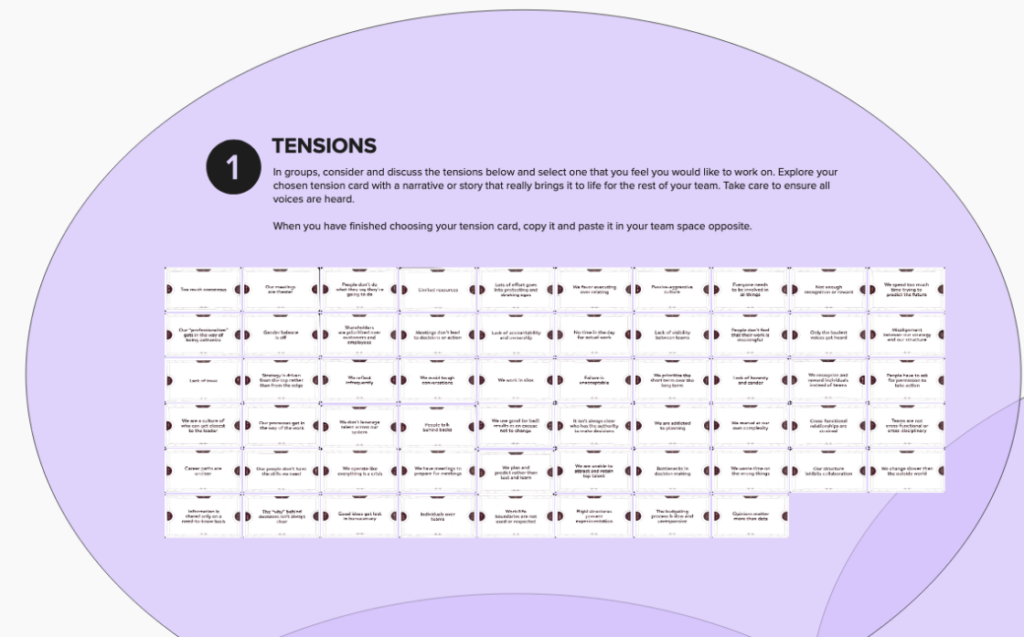
#1 Identify the Tension
In groups, virtually we used breakout rooms, consider and discuss the tensions listed and select one that you feel you would like to work on.
Explore your chosen tension card with a narrative or story that really brings it to life for the rest of your team. Take care to ensure all voices are heard.
When you have finished choosing your tension card, copy it and paste it into the team space that is set up on the board.
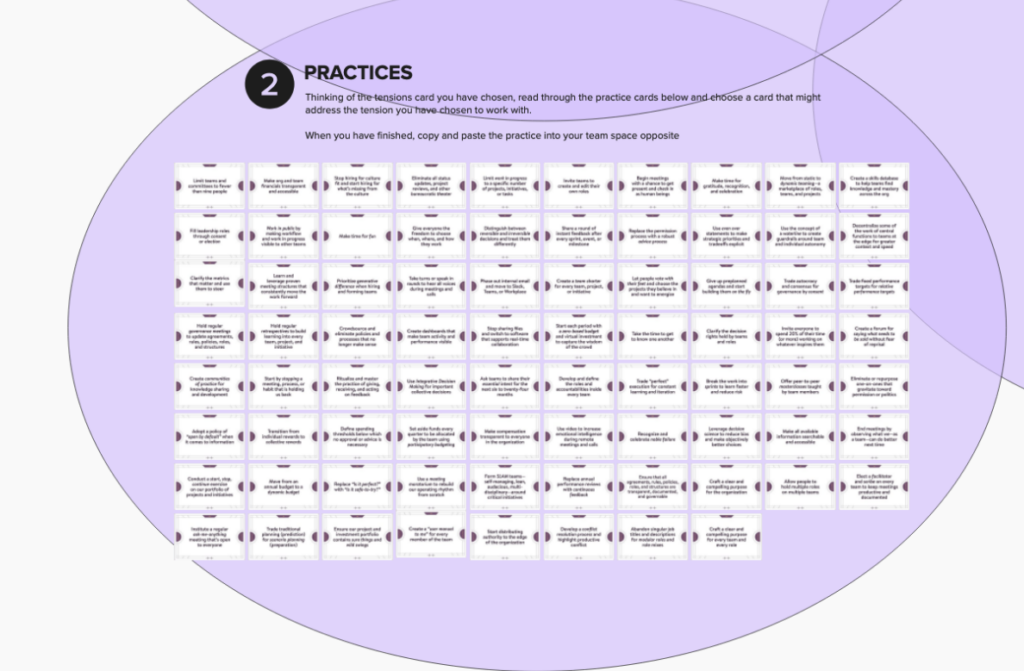
#2 Explore potential Practices that could help reduce the tension
Thinking of the tensions card you have chosen, read through the practice cards listed and choose a card that might address the tension you have chosen to work with.
When you have finished, copy and paste the practice into your team space provided.
#3 Create an Experiment
Design an experiment based on the tension you selected, the associated practices and your own intuition.
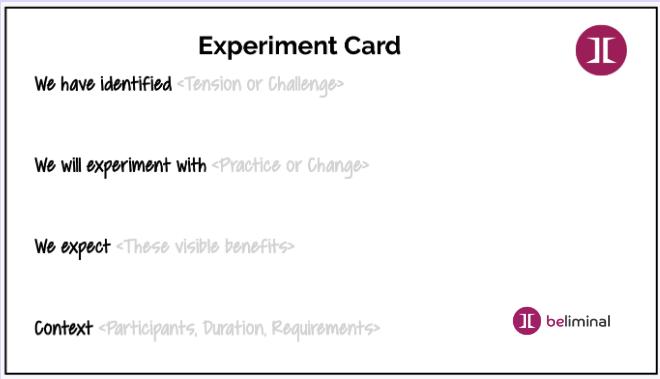
TENSION: What is your tension? What have you identified from the stories you have shared?
PRACTICE: What do you propose we try? What is your hypothesis? What is the practice or change you will introduce?
LEARNING METRICS: What do we expect to happen? How will we know if it was beneficial or harmful? What stories do you hope to hear? What data would support the results?
PARTICIPANTS: Think about who will need to be involved. What is it that they will need to do? What are they committing to?
DURATION: How long will the experiment last? When will you conduct a retrospective to collect perspectives and learnings?
REQUIREMENTS: What do you need in order to conduct the experiment, in terms of resources, space, supplies, support and funding?